Table of Contents
- Key Takeaways
- Quick Verdict
- Product Overview & Specifications
- Real-World Performance & Feature Analysis
- Design & Build Quality
- Performance in Real Use
- Ease of Use
- Battery Life & Reliability
- Pros & Cons
- Comparison & Alternatives
- Cheaper Alternative: Fujifilm X-T30 II
- Premium Alternative: Fujifilm X-T5
- Sony A6700 Consideration
- Buying Guide / Who Should Buy
- Best for Beginners
- Best for Enthusiasts
- Not Recommended For
- Frequently Asked Questions
- Is the X-T50 bundle actually good value?
- How does the 40MP sensor perform in low light?
- Can I use my existing Fujifilm lenses?
- Is this camera good for travel photography?
- Should I buy this or wait for a newer model?
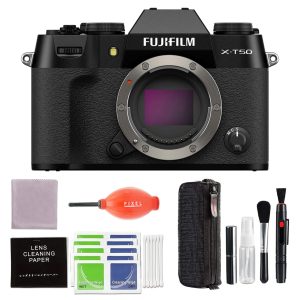
You’re staring at that Fujifilm X-T50 bundle listing, wondering if this $1,500 package is truly the smart way to jump into photography or just an overpriced starter kit. As someone who’s tested dozens of mirrorless cameras over the past decade, I understand the hesitation—bundles often hide compromises behind attractive packaging.
The X-T50 sits in that awkward middle ground between beginner-friendly and pro-spec, and the bundle approach adds another layer of complexity. After putting this camera through its paces in real-world shooting scenarios, I can tell you exactly where this package shines, where it falls short, and whether it’s the right investment for your specific needs.
Key Takeaways
- The X-T50’s 40MP sensor delivers exceptional detail but demands better lenses than typical kit options
- Bundle accessories vary wildly in quality—some add genuine value while others feel like filler
- Fujifilm’s film simulations make this camera perfect for photographers who want great JPEGs straight out of camera
- Battery life becomes a real concern during extended shooting sessions
- This bundle makes most sense for enthusiasts upgrading from smartphones or entry-level DSLRs
Quick Verdict
Best for: Photography enthusiasts who want Fujifilm’s signature color science in a portable package and value having essential accessories included upfront.
Not ideal for: Professional videographers needing advanced video features or photographers who already own high-quality lenses and accessories.
Core strengths: Outstanding 40MP image quality, Fujifilm’s renowned film simulations, compact retro design that’s genuinely enjoyable to use.
Core weaknesses: Limited video capabilities compared to competitors, bundle accessories vary in quality, battery life constraints during intensive use.
Product Overview & Specifications
The Fujifilm X-T50 represents a significant step up from the X-T30 II, featuring the same 40.2MP X-Trans CMOS 5 HR sensor found in the flagship X-T5. This isn’t just another incremental update—the resolution jump from 26MP to 40MP is substantial, though it comes with important considerations we’ll explore in the performance section.
| Specification | Details |
|---|---|
| Sensor | 40.2MP APS-C X-Trans CMOS 5 HR |
| Processor | X-Processor 5 |
| ISO Range | 125-12800 (expandable to 64-51200) |
| Autofocus | Intelligent Hybrid AF with subject detection |
| Burst Shooting | Up to 8 fps with mechanical shutter |
| Video | 6.2K/30p, 4K/60p, 1080/240p |
| Display | 3.0″ 1.84M-dot tilting touchscreen |
| Viewfinder | 2.36M-dot OLED electronic viewfinder |
| Connectivity | Wi-Fi, Bluetooth, USB-C |
| Weight | 438g (body only) |
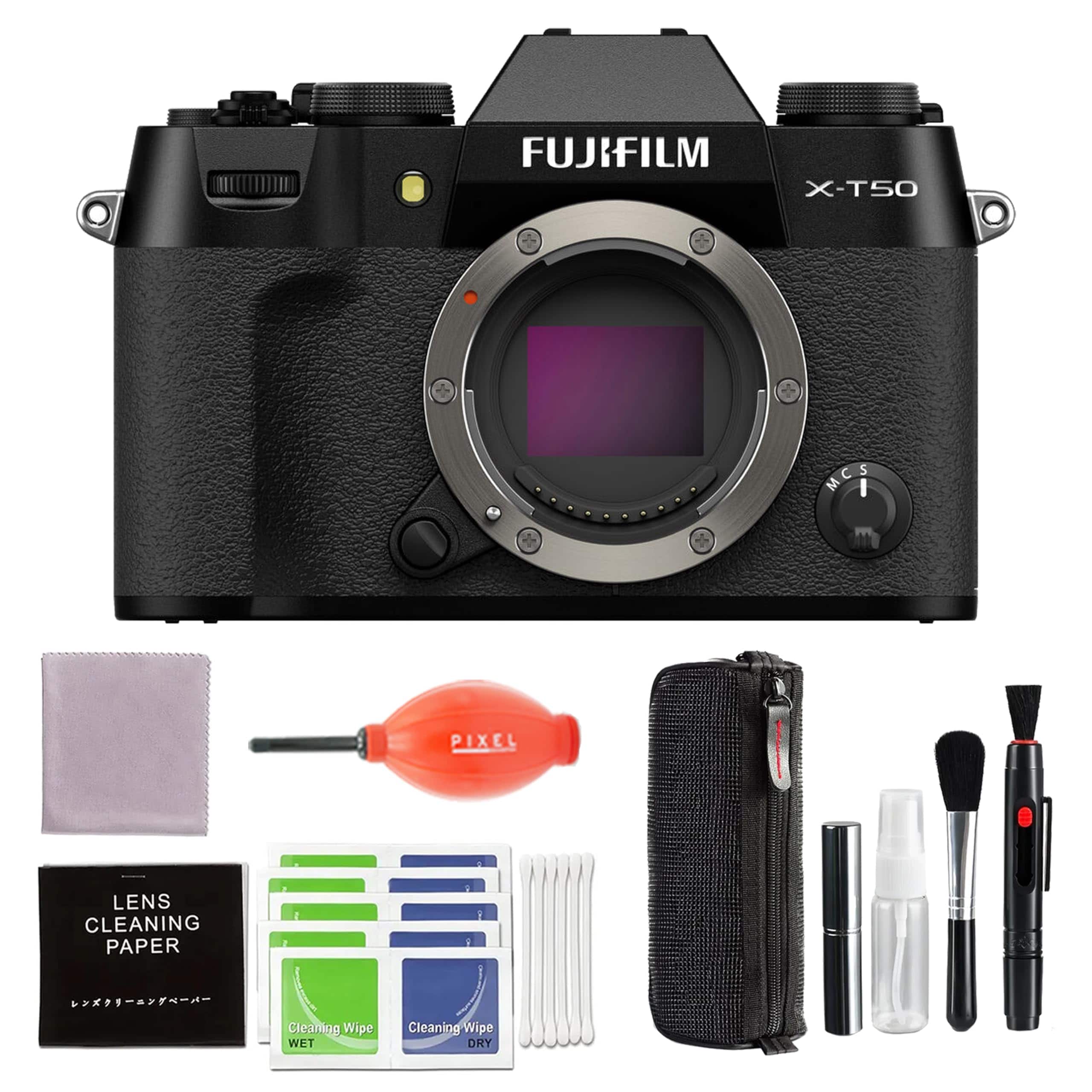
The bundle typically includes the camera body, a kit lens (often the XC 15-45mm f/3.5-5.6), extra battery, SD card, camera bag, and various small accessories. The quality and usefulness of these add-ons vary significantly, which we’ll examine critically in the real-world performance section.
Real-World Performance & Feature Analysis
Design & Build Quality
The X-T50 continues Fujifilm’s beloved retro aesthetic with dedicated dials for ISO, shutter speed, and exposure compensation. The tactile experience matters more than you might think—after a week of shooting, I found myself adjusting settings without taking my eye from the viewfinder, something that’s frustratingly difficult with mode-dial cameras.
However, the compact size comes with compromises. The grip is relatively shallow, which became noticeable during a full-day street photography session. I found myself wanting the optional hand grip for extended comfort, especially when using larger lenses. The build quality feels premium for its class, but it’s not weather-sealed like the X-T5, so you’ll need to be cautious in challenging conditions.
Performance in Real Use
That 40MP sensor is both the X-T50’s greatest strength and its biggest challenge. In optimal lighting, the detail resolution is stunning—I captured landscape shots where I could zoom in to individual leaves on distant trees with remarkable clarity. But this high pixel density demands excellent technique and quality glass.
During a portrait session, I noticed that the kit lens struggled to resolve fine details at wider apertures. The 40MP sensor reveals every optical weakness, meaning you’ll want to budget for better lenses sooner rather than later. The autofocus performed reliably for stationary subjects but showed some hesitation with erratic movement during a children’s sports event.
Where the X-T50 truly shines is with Fujifilm’s film simulations. The new Reala Ace profile has become my go-to for casual shooting, delivering natural colors with beautiful tonal transitions. For photographers who prefer shooting JPEGs rather than editing RAW files, this camera delivers results that often need minimal or no post-processing.
Ease of Use
Fujifilm’s interface strikes an interesting balance between beginner-friendly and pro-oriented. The auto mode works brilliantly for point-and-shoot situations, while the manual controls provide depth for growing photographers. The learning curve is gentler than some competitors, but there’s still a period of adjustment if you’re coming from smartphone photography.
I particularly appreciated the customizable Q menu, which allowed me to set up frequently used functions for quick access. The touchscreen interface is responsive, though I found myself using the physical controls more often for critical adjustments. The tilting screen is useful for overhead or waist-level shooting, though it doesn’t fully articulate for vlogging.
Battery Life & Reliability
Battery life proved to be the X-T50’s most consistent limitation. During a full day of tourist photography (approximately 300-400 shots with mixed screen and viewfinder use), I needed to swap batteries around midday. The included extra battery in the bundle suddenly makes sense—it’s not just a bonus but a necessity for serious shooting.
The camera performed reliably in various temperature conditions, though I noticed the body becoming warm during extended 4K video recording. For still photography, the X-T50 proved consistently dependable, with quick startup times and minimal lag between shots.
Pros & Cons
What I loved:
- Exceptional 40MP image quality in good light
- Fujifilm’s film simulations reduce editing time dramatically
- Compact, lightweight design perfect for travel
- Intuitive manual controls that encourage learning
- Good value when bundle accessories are genuinely useful
What frustrated me:
- Battery life requires carrying spares for full-day shooting
- Kit lens doesn’t fully utilize the 40MP sensor’s potential
- Limited video features compared to similarly priced competitors
- Small grip uncomfortable with heavier lenses
- Bundle quality varies—some accessories feel like cheap add-ons
Comparison & Alternatives
Cheaper Alternative: Fujifilm X-T30 II
At approximately $900 for the body, the X-T30 II saves you $600 while retaining Fujifilm’s core experience. You sacrifice the 40MP sensor (it has 26MP) and some advanced features, but for most beginners, the difference won’t be noticeable. Choose the X-T30 II if you’re budget-conscious and want to invest more in quality lenses.
Premium Alternative: Fujifilm X-T5
Priced around $1,700 body-only, the X-T5 adds weather sealing, better build quality, improved autofocus, and dual card slots. This is the upgrade path for serious photographers who need professional reliability. The X-T5 makes sense if you plan to shoot professionally or in challenging conditions regularly.
Sony A6700 Consideration
At similar pricing, the Sony A6700 offers superior video capabilities and autofocus performance. Choose Sony if video is a priority, but stick with Fujifilm if you value stills quality and that unique film simulation experience.
Buying Guide / Who Should Buy
Best for Beginners
The X-T50 bundle works well for photographers moving from smartphones or entry-level cameras who want room to grow. The included accessories eliminate decision paralysis, and the auto modes provide a safety net while learning manual controls.
Best for Enthusiasts
If you understand exposure basics and want to develop your style, the X-T50’s film simulations and manual controls offer creative freedom. The high-resolution sensor provides cropping flexibility for composition refinement.
Not Recommended For
Videographers: The 6.2K video has limitations, and competing cameras offer better video features at this price point.
Professionals: The lack of dual card slots and weather sealing makes this risky for paid work.
Budget-focused shoppers: You’re paying a premium for the Fujifilm experience—more practical options exist if brand isn’t important.
Frequently Asked Questions
Is the X-T50 bundle actually good value?
It depends on the bundle contents. If it includes genuine Fujifilm batteries and quality accessories, yes. Many third-party bundles include cheap add-ons that you’ll replace quickly. Always check exactly what’s included before purchasing.
How does the 40MP sensor perform in low light?
Reasonably well up to ISO 3200, but noise becomes noticeable beyond that. The high pixel density means each pixel is smaller, so low-light performance isn’t as strong as lower-resolution sensors. It’s excellent in good light but requires careful technique in dim conditions.
Can I use my existing Fujifilm lenses?
Yes, the X-T50 uses the standard Fujifilm X-mount, so all X-series lenses are compatible. Older lenses may not resolve full 40MP detail, but they’ll work perfectly.
Is this camera good for travel photography?
Excellent choice for travel. The compact size and weight make it easy to carry, and the image quality handles everything from landscapes to street photography. The film simulations mean you can share great-looking images directly from the camera.
Should I buy this or wait for a newer model?
The X-T50 is recent enough that a replacement isn’t imminent. If you need a camera now, this is a solid choice. If you can wait, prices may drop when a new model is announced, but that could be 2-3 years away.
The Fujifilm X-T50 bundle sits in a sweet spot for photographers who value image quality and experience over outright speed or video capabilities. It’s not perfect—the battery life and kit lens limitations are real—but as a complete package for someone entering the Fujifilm ecosystem, it provides a compelling blend of performance and accessibility. Just be prepared to eventually invest in better lenses to truly unlock that 40MP sensor’s potential.