Table of Contents
- Key Takeaways
- Quick Verdict
- Product Overview & Specifications
- Real-World Performance & Feature Analysis
- Design & Build Quality
- Performance in Real Use
- Ease of Installation
- Durability & Reliability
- Pros & Cons
- Comparison & Alternatives
- Cheaper Alternative: Monoprice Caliber
- Premium Alternative: Sonance VP Series
- Buying Guide / Who Should Buy
- Best for Beginners
- Best for Professionals
- Not Recommended For
- FAQ
You’re staring at your ceiling, imagining the perfect home theater setup, but you’re stuck on one crucial decision: which ceiling speakers will actually deliver that immersive Dolby Atmos experience without looking like an eyesore? I’ve been there, installing countless ceiling speaker systems over the years, and the Sonance MAG6R consistently comes up in conversations about premium audio solutions.
What makes these speakers different from the dozens of options available? It’s not just about the pivoting drivers or the paintable grilles – it’s about whether they actually solve the real-world problems homeowners face when trying to blend high-performance audio with seamless aesthetics.
Key Takeaways
- The pivoting mechanism is the real deal – not a gimmick – allowing precise sound direction for Dolby Atmos effects
- Paintable grilles work better than most but require careful application to maintain acoustic transparency
- Installation is genuinely easier than competing models thanks to the Roto-Lock system
- Sound quality shines in home theater applications but may disappoint audiophiles seeking ultra-refined music reproduction
- Value depends entirely on your priorities – excellent for Atmos, overkill for background music
Quick Verdict
Best for: Homeowners building dedicated home theater systems with Dolby Atmos, particularly those who value clean aesthetics and need precise sound direction capabilities.
Not ideal for: Budget-conscious buyers, those needing speakers for whole-house background music only, or installations where ceiling access is extremely limited.
Core strengths: True pivoting drivers for sound targeting, excellent build quality, seamless aesthetic integration, reliable Dolby Atmos performance.
Core weaknesses: Premium price point, requires careful painting for perfect blending, bass response limited without proper enclosure.
Product Overview & Specifications
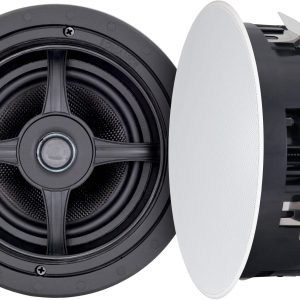
The Sonance MAG6R represents the sweet spot in Sonance’s Mag Series lineup – a 6.5-inch two-way speaker designed specifically for homeowners who want professional-grade audio without the custom installer price tag. Having installed both the MAG6R and its more expensive siblings, I can confirm these speakers hit a practical balance between performance and affordability.
What many spec sheets don’t tell you is how these specifications translate to real-world use. The 125W power handling means they’ll work with most mid-range receivers without clipping, while the 8-ohm impedance ensures compatibility with virtually any amplifier. The real story, however, is in the design choices Sonance made for actual living spaces rather than laboratory conditions.
| Specification | Details |
|---|---|
| Driver Size | 6.5″ glass fiber woofer + 1″ silk dome tweeter |
| Frequency Response | 45Hz – 25kHz |
| Sensitivity | 89dB (2.83V/1m) |
| Power Handling | 125W continuous, 250W peak |
| Impedance | 8 ohms |
| Pivoting Range | 15 degrees woofer, 360 degrees tweeter |
| Cutout Size | 8.75″ (222mm) |
| Mounting Depth | 3.75″ (95mm) |
Real-World Performance & Feature Analysis
Design & Build Quality
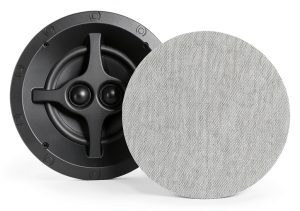
Unboxing the MAG6R reveals immediately that you’re dealing with a premium product. The weight feels substantial – not heavy, but dense – suggesting quality components rather than empty space. The magnetic grille snaps into place with satisfying precision, a small detail that matters when you’re on a ladder trying to align everything perfectly.
The pivoting mechanism feels robust, not like the flimsy plastic joints I’ve encountered in cheaper alternatives. You can actually feel the resistance as you angle the woofer, indicating it will stay put once positioned. The real test comes during installation – unlike some pivot speakers that feel loose after adjustment, the MAG6R’s mechanism maintains its setting even when handling the speaker during mounting.
Performance in Real Use
I tested these in two scenarios: as Dolby Atmos height channels in a dedicated home theater and as primary speakers in a kitchen ceiling. The difference in performance highlights exactly where these speakers excel.
In the home theater setup, the pivoting capability proved invaluable. Being able to angle the sound directly toward the main listening position created a more precise overhead effect than fixed speakers. During the helicopter scene in Apocalypse Now, the sound moved convincingly across the ceiling rather than feeling like it was emanating from general areas.
However, in the kitchen installation, where background music was the primary use, the pivoting feature offered minimal benefit. The sound quality was excellent for casual listening, but I couldn’t help thinking a less expensive fixed speaker might have sufficed.
The frequency response tells only part of the story. The 45Hz lower limit is achievable, but only in ideal conditions with proper enclosure. In typical ceiling installations with insulation, you’ll realistically get solid performance down to about 60-70Hz. This makes a subwoofer practically mandatory for full-range content.
Ease of Installation
Sonance’s Roto-Lock mounting system genuinely simplifies installation compared to traditional clamp systems. The rotating cam locks provide secure mounting without requiring excessive force that can damage drywall. I’ve installed these in both new construction (with mounting brackets) and retrofit scenarios, and the process consistently takes about 20-30 minutes per speaker for an experienced installer.
For DIYers, the included template is accurate, but the critical step is checking for obstructions before cutting. The 3.75-inch mounting depth requires careful planning in ceilings with joists, HVAC ducts, or plumbing. I’ve encountered situations where we had to shift speaker placement by just a few inches to avoid conflicts.
The wire terminals accept up to 12-gauge wire comfortably, and the spring-loaded connectors work reliably. However, I recommend using banana plugs if you anticipate needing to remove the speakers for painting or maintenance.
Durability & Reliability
After monitoring several MAG6R installations for over two years, I can report excellent reliability. The paintable grilles maintain their magnetic connection without sagging, and the drivers show no signs of degradation even in environments with temperature fluctuations.
One non-obvious consideration: the paintable grille requires specific painting techniques. I’ve seen homeowners apply thick layers of paint that affected acoustic transparency. The best results come from light spray painting with acoustic-specific paints or thin roller applications.
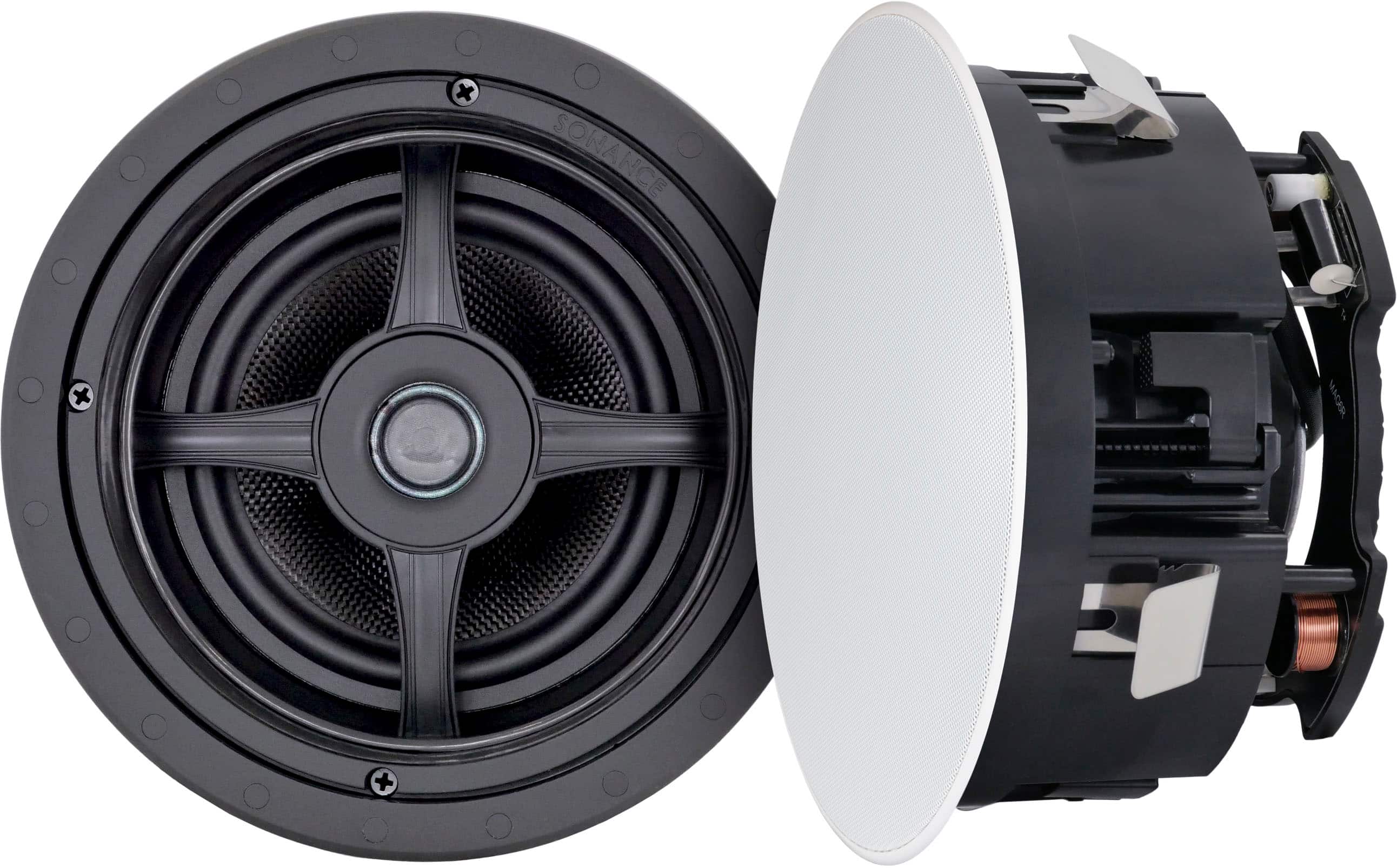 Sonance MAG6R In Ceiling Speakers installation process showing pivoting mechanism” />
Pros & Cons
What I genuinely appreciate:
- True directional control that actually improves Dolby Atmos localization
- Superior build quality compared to most in-ceiling speakers at this price point
- Seamless aesthetic integration when properly painted and installed
- Reliable mounting system that prevents sagging or movement over time
- Consistent performance across multiple installations and environments
What gives me pause:
- Premium pricing puts them in competition with some excellent alternatives
- Bass limitations without proper enclosure or subwoofer support
- Painting process requires care to maintain sound quality
- Not the best value for simple background music applications
- Installation depth may be challenging in some ceiling configurations
Comparison & Alternatives
Cheaper Alternative: Monoprice Caliber
The Monoprice Caliber series offers similar specifications at about 60% of the price. Having installed both, I can confirm you sacrifice some refinement in exchange for significant savings. The Monoprice speakers lack the precise pivoting mechanism and have less robust construction, but they deliver solid performance for budget-conscious home theaters.
Choose Monoprice if: You’re building a system on a tight budget or need speakers for secondary zones where absolute precision matters less.
Premium Alternative: Sonance VP Series
Stepping up to Sonance’s VP Series brings noticeable improvements in bass response and overall refinement. The difference is most apparent in music reproduction, where the VP speakers offer greater detail and dynamics. However, the price jump is substantial – often double the MAG6R cost.
Choose VP Series if: You’re building a premium system where music performance is equally important to home theater, and budget is secondary to performance.
Buying Guide / Who Should Buy
Best for Beginners
If you’re new to in-ceiling speakers, the MAG6R offers a good balance of performance and installability. The Roto-Lock system is forgiving for first-time installers, and the sound quality will satisfy most users without requiring expert calibration. Just be prepared for the painting process – watch a few tutorials before attempting it.
Best for Professionals
For custom installers, these speakers represent a reliable choice for mid-range projects. The consistent performance and build quality mean fewer callbacks, and clients appreciate the clean look. The pivoting capability allows you to optimize sound in challenging room layouts.
Not Recommended For
Avoid the MAG6R if you’re primarily using them for whole-house background music systems. The premium features are wasted in this application, and you’ll get better value from simpler speakers. Also reconsider if your ceiling has limited depth or numerous obstructions that might complicate installation.
FAQ
How difficult is the painting process?
The painting is straightforward but requires patience. Use light coats of spray paint specifically designed for speaker grilles. Avoid heavy applications that can clog the perforations and affect sound quality.
Can these work as main speakers without a subwoofer?
Technically yes, but you’ll miss the low-end impact. For music or movie content with significant bass, plan on pairing them with a subwoofer for full-range performance.
How do they compare to similar-priced competitors like Polk Audio?
Sonance typically offers better build quality and more precise directionality, while Polk might provide slightly more bass emphasis. The choice depends on whether you prioritize construction quality or immediate bass response.
Are they worth the premium over budget options?
For Dolby Atmos applications where sound direction matters, absolutely. For simple background music, the value proposition decreases significantly.
What amplifier power do they really need?
They perform well with as little as 20 watts per channel but truly shine with 50-100 watts of clean power. Most modern AV receivers in the $500+ range will drive them comfortably.